
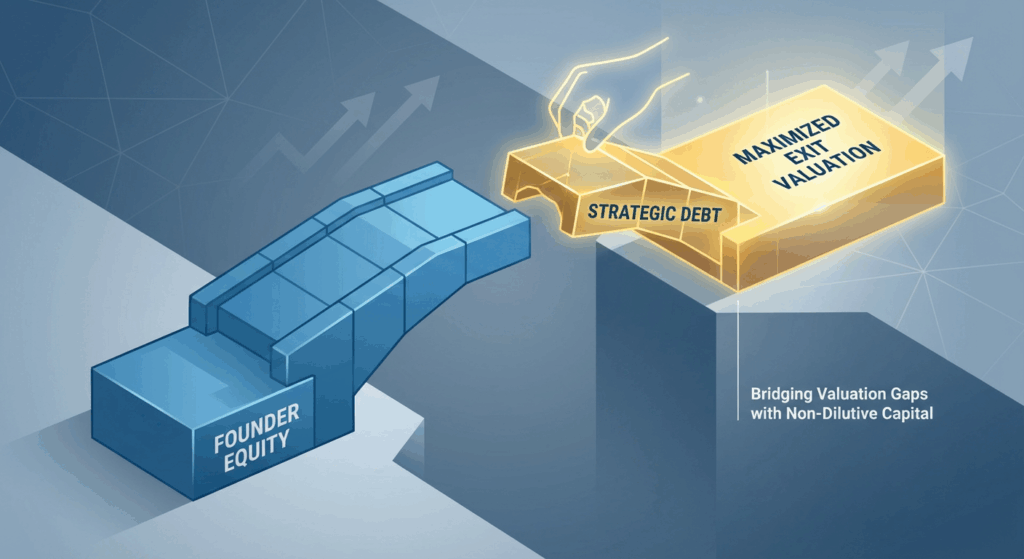
The Equity Preservation Playbook: How Founders at Myagi and WatchWire Used Debt to Optimize Exits
In the traditional startup narrative, “leverage” is often viewed through a binary lens: it is either a tool for private equity titans to juice returns in massive buyouts, or it is a distress signal for companies running out of runway. For the middle-market founder, the playbook usually dictates a different path: raise equity, dilute, grow, and repeat until an IPO or acquisition.
But a quiet shift has occurred in how astute founders view their capital stacks, particularly in the years leading up to a planned exit. Rather than treating debt as a liability to be feared, operators are increasingly treating it as a strategic asset to bridge valuation gaps and preserve ownership.
Two recent case studies (retail sales platform Myagi and energy management firm WatchWire) illustrate exactly how founders can use non-dilutive capital to break the venture cycle and retain control during critical growth phases.
The Founder’s Dilemma: Growth Without the Handcuffs
In early 2020, Simon Turner, co-founder of Myagi, faced a scenario familiar to many operators. The company, a digital platform for retail sales enablement, had planned a significant equity raise. Then the pandemic hit.
While COVID-19 froze many capital markets, it paradoxically accelerated demand for Myagi’s digital tools as physical retail faced unprecedented disruption. The company experienced its best six months of growth to date. Turner found himself in a classic “good problem” scenario: he had the metrics to justify a higher valuation, but he needed immediate cash to capture the market. Raising equity in a turbulent macro environment often means accepting unfavorable terms or excessive dilution, permanent costs for temporary capital needs.
Similarly, Andy Anderson, then-CEO of WatchWire (formerly EnergyWatch), sat at a different inflection point. Founded in 2000, WatchWire had spent years bootstrapping, pivoting from consulting to a SaaS-based sustainability platform. By 2021, the company was attracting attention from private equity firms looking for platforms in the hot cleantech space. Anderson faced a choice: raise venture capital to fuel the final sprint toward an exit, or find a way to grow without giving up another slice of the cap table right before a liquidity event.
The Decision: Debt as a Bridge, Not a Burden
Both founders recognized that equity is most expensive when you are on the cusp of a valuation step-up. Selling 20% of the company to fund 18 months of growth is mathematically painful if you plan to sell the entire company in year three.
Instead of the VC route, both Myagi and WatchWire turned to specialized debt financing.
For Myagi, Turner secured a $2.5 million investment facility from TIMIA Capital in early 2021. The logic was precise: use the capital to invest in the specific revenue-generating activities that would boost the company’s valuation multiple, without altering the ownership structure. “Debt is a powerful tool for capital-efficient businesses when used under the right circumstances,” Turner noted.
WatchWire executed a nearly identical play, securing $2.5 million in 2021. For Anderson, the decision was about optionality. “Non-dilutive capital was key for us. It’s simply much cheaper capital,” Anderson explained. “Even if it’s just a bridge to something bigger like a larger VC round, [it] will help us get to that next level.”
By choosing debt, both companies bet on their own execution. They replaced the permanent cost of equity (sharing the upside) with the temporary cost of debt (interest payments), wagering that their growth would outpace the cost of capital.
The Outcome: Liquidity with Leverage
The bets paid off.
Myagi used the capital to enhance its referral-based sales model and software capabilities. Roughly two years after securing the debt facility, the company was acquired by Rallyware. Because Turner and his team hadn’t diluted their ownership at the chaotic onset of 2020, the exit proceeds were concentrated among the existing shareholders rather than a late-stage VC entrant.
WatchWire’s trajectory followed a similar arc. The capital fueled growth in its sustainability reporting features, solidifying its market leadership. In 2023, just two years after taking on the debt, WatchWire was acquired by Tango Analytics, a portfolio company of Berkshire Partners. The debt acted as a bridge, allowing WatchWire to reach an exit-ready valuation on its own terms.
In both cases, the timeline is instructive. The debt wasn’t a “forever” layer of the capital structure; it was a specific tool used for a 24-month horizon to maximize enterprise value prior to a sale.
The Lessons: Principles for the Capital-Efficient Founder
The stories of Myagi and WatchWire offer a counter-narrative to the “growth at all costs” venture model. Here are the core principles for founders considering this path:
1. The “Cost of Capital” is Relative to Time
Equity is the most expensive capital because it is permanent. If you believe your company will exit or recapitalize within 24–36 months, the cost of debt (even at higher interest rates) is almost always lower than the cost of giving up 10–20% of the equity upside.
2. Preserve Optionality
Venture capital often comes with governance strings: board seats, blocking rights, and liquidation preferences. Debt, particularly revenue-based or venture debt, typically leaves governance in the hands of the founders. This control is crucial when negotiating an exit; you don’t have a VC looking for a specific fund-return multiple blocking a deal that might be life-changing for the founders.
3. Bridge to a specific milestone
Leverage works best when it fuels a specific, measurable outcome. In these cases, the debt wasn’t for “keeping the lights on”; it was for specific product enhancements and sales acceleration that directly correlated to acquisition value.
4. Scrutinize the Exit Horizon
This strategy relies on an exit or a refinancing event. If the exit window closes and the company is stuck servicing debt without growth, the leverage turns from a bridge into an anchor. This approach requires high conviction in the M&A market or profitability.
As the private credit market matures, “leverage” is no longer a dirty word for founders. It is a precision instrument for those who understand that in the game of exits, the size of the pie matters, but the size of your slice matters more.


