
The Deal That Changed the Rules
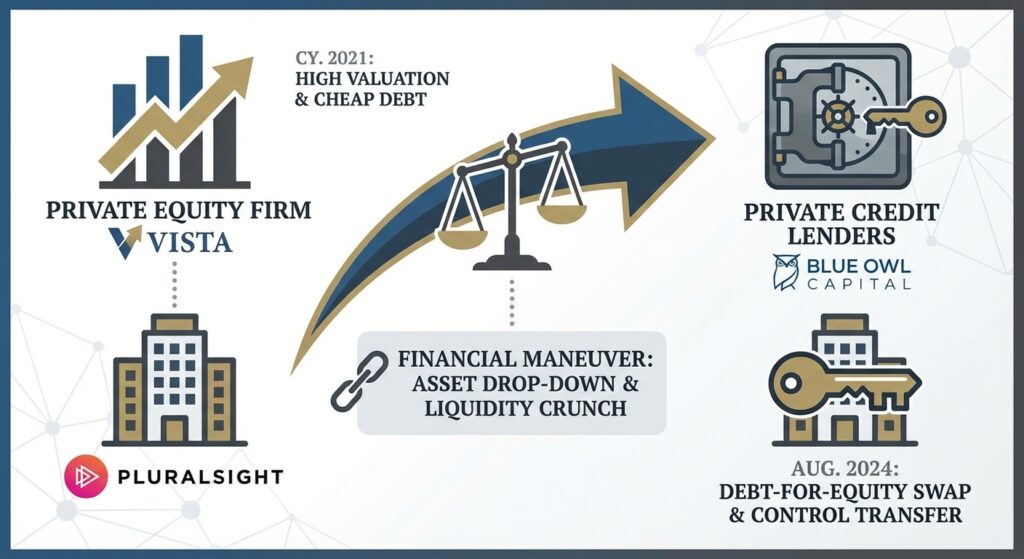
In the golden era of 2021, software valuations were skyrocketing, and debt was cheap. Vista Equity Partners, one of the world’s premier technology investors, took the workforce development platform Pluralsight private in a massive $3.5 billion deal. It was a textbook play: acquire a high-quality recurring revenue business, apply operational expertise, and leverage it to boost returns.
But by late 2024, the script had flipped. In a stunning turn of events that sent shockwaves through the private markets, Vista effectively handed the keys to the company over to its lenders. The equity, including the stakes held by management who may have rolled over, was drastically impacted, and a consortium led by Blue Owl Capital emerged as the new owners.
For founders and operators, the Pluralsight saga is more than just Wall Street gossip. It is a masterclass in capital structure risk, the hidden dangers of “rolling equity,” and the evolving power dynamics between private equity sponsors and private credit lenders.
The Capital Decision: Engineering vs. Reality
The trouble at Pluralsight wasn’t necessarily the product; it was the balance sheet. As interest rates climbed in 2022 and 2023, the floating-rate debt used to purchase the company became significantly more expensive. Simultaneously, the tech sector faced headwinds, slowing growth rates that were essential to support the leverage multiple.
Facing a liquidity crunch, Vista attempted a controversial financial maneuver known as a “drop-down.” According to legal analyses by Goodwin Law, Pluralsight moved intellectual property assets into a new subsidiary to raise fresh capital, technically bypassing restrictions in the original loan documents. This was an attempt to buy time and keep the equity alive.
While such moves often force lenders to the negotiating table, the outcome here was different. The private credit group (comprised of sophisticated giants like Blue Owl, Ares Management, and Golub Capital) held firm.
The Outcome: Lenders Take the Wheel
Instead of extending “amend and pretend” waivers, the lenders executed a debt-for-equity swap in August 2024. The results were stark:
- Equity Deficit: The sponsor’s equity position was effectively wiped out in the restructuring.
- Debt Reduction: The lenders agreed to erase approximately $1.3 billion in debt from the company’s balance sheet to right-size the capital structure.
- New Capital: The lending group injected roughly $250 million in new money to reignite growth, as reported by BNN Bloomberg.
The company survived, but the ownership structure was completely reset. The “passive” lenders became the active owners, proving that in modern private markets, credit funds are increasingly capable of acting as operators of last resort.
The Lessons for Founders
Why does a multi-billion dollar PE bust matter to a founder considering distinct growth financing today? The Pluralsight case illustrates three critical principles of leverage:
1. Structural Subordination Risks
Founders often sell a majority stake to PE and “roll” 20-30% of their equity to participate in the “second bite of the apple.” Pluralsight demonstrates the risk of this position. When a sponsor over-leverages the company, that rolled equity sits beneath a mountain of senior debt. If the enterprise value dips below the debt value, the founder’s equity is the first to evaporate.
2. The Difference Between Operating & Financial Leverage
There is a distinct difference between debt used for growth (hiring, R&D, M&A) and debt used for buyouts (paying off existing shareholders). Pluralsight’s debt burden was a function of its ownership transfer, not its operational needs. Founders retaining control should view debt as a tool to fuel the P&L, not just the balance sheet.
3. Lender Alignment Matters
The private credit lenders in this case acted rationally to protect their principal. For a founder-led business, selecting a lender isn’t just about the rate, it’s about understanding who controls the company if things go sideways. Private credit firms have moved from passive yield-seekers to sophisticated asset managers who are not afraid to take the keys.
This article is for informational purposes only and does not constitute investment advice.


