
The Underwriting Challenge: When Covenant Protection Erodes, Who Is Watching?
Imagine you have deployed capital into a $10M EBITDA manufacturing company at 4.5x total leverage. Twelve months later, the borrower’s adjusted EBITDA has quietly drifted to $8.2M, a 19% decline, while management has reclassified $900K of recurring overhead as a one-time restructuring charge. Under a tightly covenanted loan, your monitoring system would have triggered a compliance test, opened a lender conversation, and potentially invoked a pricing step-up or cure right. Under a covenant-lite structure, you may not find out until the borrower misses a cash interest payment.
This is not a hypothetical. According to research cited by ainvest.com, the share of “bad PIKs”, retroactive conversions of cash interest to payment-in-kind, surged from 36.7% in Q4 2021 to 57.2% by Q3 2025, a direct symptom of eroding underwriting discipline and structural protections. When covenants are absent or loosely drafted, lenders lose their earliest warning signal. The result: liquidity crises that appear sudden but were months in the making.
For middle market lenders, robust covenant design is not a negotiating afterthought; it is the primary instrument of ongoing credit control. This framework shows you how to build it correctly from origination through portfolio monitoring.
The Analytical Framework: Three Pillars of Covenant Architecture
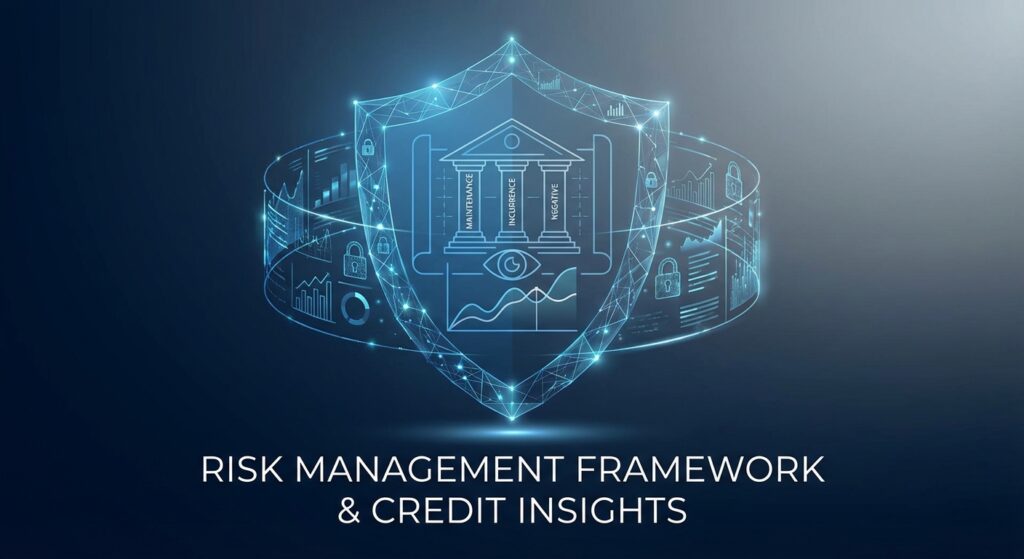
Effective covenant structures in middle market private credit rest on three functional pillars: maintenance covenants that test credit health on a recurring basis, incurrence covenants that restrict specific actions at the moment they occur, and negative covenants that prohibit behaviors that transfer value away from lenders. Together, these create layered protection rather than a single point of failure.
Pillar 1, Maintenance Covenants: The Early Warning System
Maintenance covenants are tested quarterly, regardless of borrower action. They are the heartbeat monitor of the credit. The most critical metrics for a $10M EBITDA manufacturing borrower are:
- Maximum Total Leverage Ratio: Total Funded Debt ÷ Adjusted EBITDA (LTM). Set initial headroom at 20–25% above the entry multiple. At 4.5x closing leverage, set the covenant at 5.5x.
- Minimum Fixed Charge Coverage Ratio (FCCR): (EBITDA – Capex – Cash Taxes) ÷ (Interest Expense + Scheduled Principal). A floor of 1.10x–1.15x is standard for senior secured middle market loans.
- Minimum Liquidity: Unrestricted cash plus revolver availability should remain above a defined floor, typically $2M–$3M or 15% of the revolver commitment for a business of this size.
Pillar 2, Incurrence Covenants: Gating High-Risk Events
Incurrence covenants activate only when the borrower takes a specific action: issuing additional debt, making an acquisition, paying a restricted payment, or disposing of assets. Key tests include a maximum pro forma leverage ratio and a minimum FCCR immediately after the contemplated transaction. These are critical in sponsor-backed deals where dividend recapitalizations are a documented value-extraction strategy.
Pillar 3, Negative Covenants: Restricting Value Leakage
Negative covenants form the legal fence around your collateral. They should explicitly restrict: additional indebtedness above a permitted basket, liens on collateral, asset dispositions above a defined threshold (commonly 10–15% of total assets per annum), affiliate transactions at non-arm’s-length terms, and changes in the fundamental nature of the business. Each basket and exception must be sized to the specific borrower, generic templates create unintended flexibility.
Walking Through the Numbers: A $10M EBITDA Manufacturing Credit
At close, the borrower has $45M in total funded debt and $10M in adjusted EBITDA, producing a 4.5x leverage ratio. Annual interest expense is $4.5M (10% all-in rate), maintenance capex is $1.2M, and scheduled principal amortization is $450K (1% per year). Cash taxes are $800K.
FCCR at close:
Numerator: $10M – $1.2M – $800K = $8.0M
Denominator: $4.5M + $450K = $4.95M
FCCR = 1.62x: healthy at origination.
Now apply a stress scenario: EBITDA declines 18% to $8.2M and the borrower has reclassified $900K of overhead as add-backs, meaning true economic EBITDA may be closer to $7.3M.
Stressed FCCR (true economics):
Numerator: $7.3M – $1.2M – $650K = $5.45M
Denominator: $4.5M + $450K = $4.95M
FCCR = 1.10x: right at the covenant floor.
This is precisely why EBITDA normalization discipline at underwriting matters. If the lender accepted inflated add-backs at origination, the covenant floor was already breached on a true-economics basis before the first quarterly test. Maintaining a normalized, lender-defined EBITDA definition in the credit agreement, not the borrower’s definition, is non-negotiable.
What Institutional Lenders Require: Standards, Red Flags, and Credit Data
Leading institutional private credit managers, including those operating large-cap strategies, have documented that larger-scale borrowers with tighter covenant documentation have historically exhibited lower default rates and higher recovery rates. pgim.com notes that tighter security documentation and favorable fundamentals are key selection criteria for lower-risk private credit deployment.
Fitch’s published rating methodologies reinforce that qualitative factors (management quality, competitive intensity, and sector volatility) overlay and often drive quantitative covenant-setting decisions. Per Fitch Ratings Procedures and Methodologies, sector-specific risk profiles, barrier to entry, and demand volatility must inform how tightly a lender calibrates headroom within covenant tests.
Moody’s Analytics portfolio modeling frameworks, detailed in their Overview of Modeling Credit Portfolios, highlight that concentration risk and correlation between credits within a portfolio magnify individual covenant breach events into systemic risk, particularly in sector-concentrated middle market books.
- “Bad PIK” share (retroactive cash-to-PIK conversions): 57.2% of PIK activity as of Q3 2025, up from 36.7% in Q4 2021, signaling widespread cash flow stress among borrowers. [ainvest.com]
- Private credit AUM: approximately $3 trillion globally, with structural covenant weaknesses concentrated in covenant-lite and sponsor-backed middle market segments.
- Covenant-lite structures have expanded from leveraged loan markets into direct lending, with aggressive competition for jumbo transactions contributing to eroding underwriting discipline in the U.S. middle market.
- Large-cap private credit borrowers with tighter documentation have demonstrated historically lower default rates and higher lender recovery rates versus small/mid market covenant-lite peers. [pgim.com]
Red Flags in Covenant Documentation
- Borrower-defined EBITDA with uncapped add-backs: If the credit agreement does not enumerate and cap adjustments (e.g., capped at 25–35% of unadjusted EBITDA), earnings manipulation risk is structural.
- Springing covenants tied only to revolver utilization: A covenant that only tests when the revolver is drawn above 35% provides no protection on a term-only or lightly drawn structure.
- Grower baskets without earnings-based caps: Permitted debt or lien baskets that grow with EBITDA can expand dramatically and subordinate existing lenders in a declining credit.
- Broad Material Adverse Change (MAC) carve-outs: Industry-wide exceptions to MAC definitions can eliminate what lenders believe is an event of default protection.
- Equity cure rights without limits: Unlimited cure rights allow sponsors to inject equity to satisfy covenant tests indefinitely, effectively defeating the covenant’s monitoring function.
Underwriting Checklist: Covenant Design and Ongoing Monitoring
At Origination
- ☐ Define EBITDA in the credit agreement with an enumerated, capped add-back schedule, do not incorporate by reference to management’s calculation.
- ☐ Set maintenance covenant levels with 20–25% headroom from closing metrics; stress-test to confirm headroom survives a base-case downside (15–20% EBITDA decline).
- ☐ Confirm FCCR definition includes maintenance capex and cash taxes, not just cash interest and scheduled amortization.
- ☐ Size negative covenant baskets (debt, liens, restricted payments, asset sales) based on the specific borrower’s size, not a generic template.
- ☐ Cap equity cure rights at two consecutive quarters and four times over the loan life; require cured amounts to reduce available baskets.
- ☐ Confirm MAC definition covers borrower-specific adverse changes without broad industry or market carve-outs that create ambiguity.
Quarterly Monitoring
- ☐ Require compliance certificates with supporting financial statements within 45 days of each fiscal quarter end.
- ☐ Independently calculate all covenant ratios using lender-defined EBITDA, do not rely solely on borrower’s certificate.
- ☐ Flag any quarter-over-quarter deterioration of 10%+ in adjusted EBITDA for management call and written explanation.
- ☐ Monitor PIK elections, any retroactive cash-to-PIK conversion should trigger an immediate credit review and covenant tightening discussion.
- ☐ Reconcile reported add-backs to actual cash receipts and one-time expense documentation at least annually.
Questions to Ask Management Every Quarter
- What drove any variance from plan in revenue and EBITDA, and is it structural or temporal?
- Have any customer concentration changes occurred that would affect recurring revenue quality?
- Are any pending litigation, tax contingencies, or regulatory matters not reflected in financial statements?
Key Takeaways
- 🔑 Covenant design is credit control: Maintenance covenants tested quarterly are your earliest warning system; they must be drafted with lender-defined terms, not borrower flexibility, built in from day one.
- 🔑 EBITDA definition risk is as real as default risk: Uncapped, loosely defined add-backs allow earnings to be inflated at precisely the moment credit quality is deteriorating, the worst possible time for a lender to lose visibility.
- 🔑 PIK conversion is a leading indicator, not a solution: The surge of retroactive bad PIK conversions to 57.2% of PIK activity by Q3 2025 is a market-wide signal that cash flow stress is being deferred, not resolved, and that covenant protections are failing to surface the problem early enough.
- 🔑 Stress testing at origination is non-negotiable: Every covenant level must be validated against a 15–20% downside EBITDA scenario before closing; headroom that disappears in a mild stress is not real protection.
- 🔑 Documentation quality predicts recovery: Institutional evidence consistently links tighter covenant documentation and security packages to lower default rates and higher lender recovery rates, investing time in legal documentation is direct return protection, not administrative overhead.


