
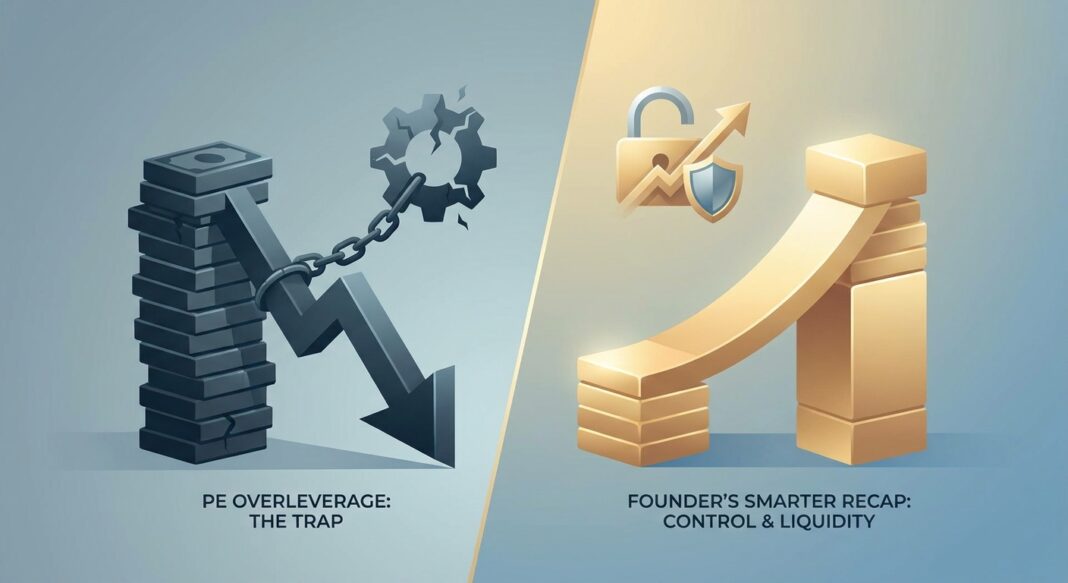
The Story: A Company Buried Under Its Own Sponsors
In 2015, Vista Equity Partners paid $350 million to acquire PowerSchool from Pearson — a tidy, profitable K-12 student information system with $97 million in revenues and $20 million in operating income. It was, on its face, a perfectly serviceable software business. Then the financial engineering began.
Vista bought PowerSchool for $350 million in 2015 from Pearson, and subsequently spent more than $1 billion acquiring eight additional companies to bolt onto the platform. Onex Corp. then purchased a stake in PowerSchool from Vista in 2018, adding another layer of financial sponsors — and, critically, another layer of debt obligations — onto an operating business that was beginning to buckle.
By the time PowerSchool went public in 2021, the cracks were already visible. In 2020, PowerSchool lost $46.7 million while generating $434.9 million in revenue, and the year before that recorded a loss of $90.7 million with $365 million in sales. A company that was profitable when Vista acquired it was now reporting nine-figure losses — not because the product had failed, but because the capital structure was extracting value faster than the business could generate it.
Then, in June 2024, a third PE firm entered the picture. PowerSchool announced it had entered into a definitive agreement to be acquired by Bain Capital in a transaction valuing the company at $5.6 billion. It looked like a triumph — a 16-year journey from $350 million to $5.6 billion. But the numbers told a more uncomfortable story.
The Decision: Stack More Debt on a Debt-Strained Business
Here is where the story turns instructive. Rather than using the Bain acquisition as an opportunity to right-size the balance sheet, the deal layered on yet more leverage. PowerSchool had maintained three consecutive years of losses in the period preceding the deal, in part due to punishing debt service costs thrown onto the company after years of buyouts — and instead of injecting fresh equity, Bain financed its buyout with $3.2 billion in high-interest loans that added an extra $300 million in annual interest payments to PowerSchool’s already punishing cost structure.
Debt financing for the Bain transaction was provided by Ares Capital Management, HPS Investment Partners, Blackstone Alternative Credit Advisors, Blue Owl Credit Advisors, Sixth Street Partners, and Golub Capital — a consortium of the largest private credit names in the market. The irony: the same private credit market that enables founder-friendly, equity-preserving recapitalizations was here being weaponized to maximize sponsor returns at the operating company’s expense.
The contrast between PE-led leverage and owner-operator leverage couldn’t be sharper. A leveraged recapitalization is a capital structure transaction in which a company replaces a portion of its equity with new debt and pays the proceeds to shareholders — the owner extracts cash from the business without selling to a third party, while the company assumes a higher debt-to-equity ratio and accepts the ongoing interest burden. In a founder-led recap, this structure exists to serve the person who built and continues to run the business. In the PE version, it exists to serve a fund’s internal rate of return clock.
The distinction matters because incentives drive outcomes. A leveraged recapitalization and a leveraged buyout both rely on significant debt financing, but they serve different purposes and have different ownership outcomes — a leveraged recapitalization is initiated by the existing owner to extract cash while retaining control, whereas an LBO is initiated by a buyer, typically a private equity sponsor, to acquire the company outright. In the PowerSchool case, the LBO mechanism was used serially, compounding leverage across three different ownership events without ever genuinely resetting the capital structure for the business’s long-term benefit.
The Outcome: Who Won, Who Lost, and What the Market Is Doing Instead
In 2024, PowerSchool was taken private by Bain Capital in a $5.6 billion leveraged buyout that was an enormous boon to Vista Equity Partners, which had originally purchased the company for $350 million nine years earlier. Vista’s financial return was real. But the vehicle that generated it — the operating company and its employees, customers, and future obligations — was left carrying a debt burden that its own cash flows struggled to service.
The broader market watched and drew its own conclusions. Leveraged loan issuance value tied to sponsored dividend recaps grew 11% year-over-year to $74.3 billion in 2025 after rising 326% year-over-year in 2024, according to PitchBook — reflecting continued lender appetite and sponsor urgency to return capital amid extended holding periods. But the smarter operators were doing something different. They were accessing the same debt markets on their own terms, before a PE sponsor ever entered the picture.
Companies use leveraged recapitalizations when the owner wants personal liquidity but the business is not a candidate for a full sale, either because the owner wants to continue operating or because market conditions do not favor an exit. According to the Pepperdine Private Capital Markets Report (2024), lower middle market leveraged recapitalizations typically close at 3x to 5x EBITDA in total debt, with pricing tied to prevailing senior secured rates plus a margin based on risk profile. For a founder running a business generating $5 million in EBITDA, that means $15–$25 million in tax-advantaged liquidity — without giving up a single point of equity or inviting a sponsor’s fund timeline into the boardroom.
Compare that to the PowerSchool path: Vista’s equity was eventually monetized, but only because a bigger sponsor showed up to absorb the debt load and try again. Not every company gets that third bite of the apple. For fundamentally sound businesses burdened by excessive leverage, out-of-court restructuring transactions can deliver faster balance-sheet repair — but that repair comes at the cost of ownership, governance, and often years of stunted operational investment. The wound is real, even when the patient survives.
The Lessons: A Framework for Founders Facing the Same Choice
The PowerSchool story is not an indictment of private equity as a category. Vista built real value — it consolidated a fragmented market, professionalized management, and expanded a product that now serves over 60 million students globally. But the capital structure choices made at each ownership transition added friction that compounded against the operating business. That is the cautionary tale.
For founders and family business owners who face the same fundamental question — how do I access liquidity without selling control — the leveraged recapitalization offers a structurally superior answer, provided three conditions are met:
- Stable, recurring cash flows. The transaction is commonly used for partner buyouts, estate planning liquidity, and partial exits where the owner wants to de-risk personally while continuing to operate — and formally adds senior bank debt, unitranche, or mezzanine financing to the balance sheet, using that capital to fund a dividend, redeem shares, or buy out a minority partner. Lenders need to underwrite the debt service. A business with lumpy, project-based revenues is a harder candidate than one with multi-year subscription contracts.
- Leverage sized for operations, not sponsor returns. The PowerSchool spiral was caused, in part, by sizing debt to maximize distributions rather than to optimize the operating company’s flexibility. Executing a dividend recap strategy shifts substantial risk onto the operating business — while distributions provide immediate relief, the underlying company assumes additional debt obligations that reduce future operational flexibility. A founder-initiated recap should leave meaningful headroom above debt covenants.
- A clear use of proceeds that benefits the business, not just the owner. Leveraged recaps create liquidity without requiring a sale — a founder-owned company with stable EBITDA can borrow against its cash flows to distribute personal liquidity, fund acquisitions, or buy out partners, all without triggering a change of control or accepting a VC clock. The most durable recaps serve both purposes simultaneously.
The private credit market has never been more capable of executing these structures for founder-owned companies. Strategic solutions including recapitalisations and capital structure optimisation tailored to specific sponsor and founder objectives — including non-dilutive capital, partial exits, or the selective introduction of institutional partners — are now standard offerings from private credit platforms. The market infrastructure exists. The question is whether founders access it on their terms, or wait until a PE sponsor arrives and does it for them.
Key Insights
- Leverage is neutral; incentives are not. The same debt instrument that created PowerSchool’s losses can create a founder’s liquidity and freedom. What matters is who controls the structure and why.
- Serial PE ownership compounds leverage risk. Each new sponsor adds debt to justify their entry price. By the third transaction, the business may be technically solvent but operationally constrained — unable to invest, hire, or weather a downturn without lender consent.
- The recap market is at a historic high — and accessible. PitchBook data indicate there were nearly 30 private equity-backed dividend recapitalization transactions of $1 billion or more, and over $70 billion in private equity-backed leveraged loans for dividend recapitalizations in 2025. Founder-led recaps sit at the smaller end of this market but benefit from the same lender appetite and spread compression.
- Founder-initiated recaps preserve optionality. Taking liquidity via a recap today does not foreclose a future sale, IPO, or growth equity raise. It simply means the founder has already been paid once — without dilution or a change of control — before that next chapter begins.
- Right-sized debt is a feature, not a compromise. At low levels of debt service, founders can avoid dilution while using a modest percentage of burn to pay for the interest expense — and that calculus holds for profitable businesses as much as for growth-stage companies. The discipline of structured repayment is often what separates businesses that scale cleanly from those that carry PE baggage into every strategic conversation.


