
March 2020 was a graveyard for term sheets. Simon Turner, co-founder of the retail sales enablement platform Myagi, was gearing up for a significant equity round when the global pandemic shut down capital markets. The “growth at all costs” mantra of venture capital suddenly shifted to “survival of the fittest.”
But Myagi wasn’t just trying to survive; the shift to remote work meant demand for digital retail solutions was spiking. They had the growth metrics, but they needed fuel to capture the market. The traditional playbook dictated waiting for the VC window to reopen or accepting punishing terms. Turner chose a different door: private credit.
The Decision: Dilution vs. Leverage
The standard playbook for a SaaS company in Myagi’s position is almost reflexively equity-focused: raise a Series A or B, dilute by 15-25%, and aim for the next valuation markup. However, in early 2021, Turner faced a choice. He could pursue equity capital—potentially at a valuation that didn’t fully reflect the company’s recent surge—or utilize leverage.
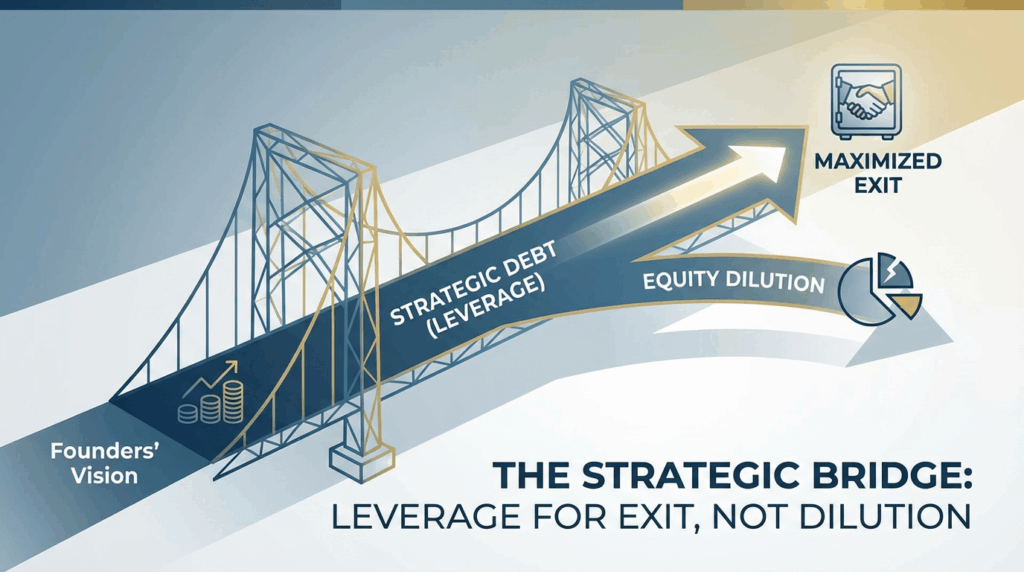
The math of dilution is unforgiving. Raising $2.5 million in equity at a $10 million pre-money valuation costs the founders 20% of the company forever. Raising $2.5 million in debt costs interest, but the cap table remains intact. Turner opted for a $2.5 million investment facility from TIMIA Capital. The goal wasn’t just runway; it was a strategic bridge to a liquidity event.
“Debt is a powerful tool for capital-efficient businesses when used under the right circumstances,” Turner later noted in a post-exit reflection.
The Outcome: A Clean Exit
The capital was deployed immediately into sales, marketing, and customer success—activities designed to spike revenue and solidify market position, not just build long-term R&D. This is a crucial distinction in leverage scenarios: debt is best used for activities with predictable near-term ROI.
Roughly two years after securing the non-dilutive capital, the strategy paid off. Myagi was acquired by Rallyware. By avoiding the dilution of an interim equity round, the founders and early shareholders maximized their take-home from the exit.
Had they raised equity in 2021, the new investors would have taken a significant slice of the liquidation preference stack. By using debt, the liability was extinguished at closing, leaving the remaining equity value for the founders and early employees. This pattern isn’t unique to Myagi; WatchWire executed a similar strategy, using debt to bridge to their 2023 acquisition by Tango Analytics, proving that for companies with real revenue, credit can be the ultimate founder-friendly instrument.
The Lessons: The “Bridge to Exit” Framework
Myagi’s story illustrates a specific leverage use case: The Bridge to Exit. Many founders view debt solely as a lifeline for distressed companies or a tool for massive buyouts. Myagi demonstrated that debt is often the cheapest form of equity preservation during a growth spurt preceding an M&A event.
Principle 1: Cost of Capital Arbitrage
If your company is growing at 30-50% year-over-year, and your cost of debt is 12-15%, you are arbitraging that spread. If you sell equity, you are selling the future value of that 50% growth at today’s price.
Principle 2: Exit Hygiene
A clean cap table with fewer preference stacks makes M&A negotiations simpler. Private equity acquirers often prefer buying companies with simpler structures where they don’t have to negotiate with a complex stack of VC interests.
However, this approach requires discipline. The “Bridge to Exit” works only if the exit actually materializes or if the underlying cash flows can service the debt indefinitely. Myagi’s unit economics were sound enough to support the leverage, making it a calculated risk rather than a gamble.
Key Insights
- Dilution is Permanent, Debt is Temporary: Equity acts as a permanent tax on an exit; debt is a temporary liability that disappears upon repayment.
- Match Duration to Use: Myagi used capital for sales and marketing (short-term feedback loop), which aligns well with debt service requirements.
- The Valuation Gap: Use debt when you believe your current valuation implies too much dilution, effectively betting on your ability to grow into a higher price later.
- Bridge vs. Pier: Ensure your debt connects you to a clear destination (profitability or exit). A bridge to nowhere is just bankruptcy.
- Market Timing: When equity markets seize up (like in 2020) or contract, private credit often remains open for businesses with real revenue.


