
Why the Fine Print in Your Loan Agreement Is Actually the Most Important Page
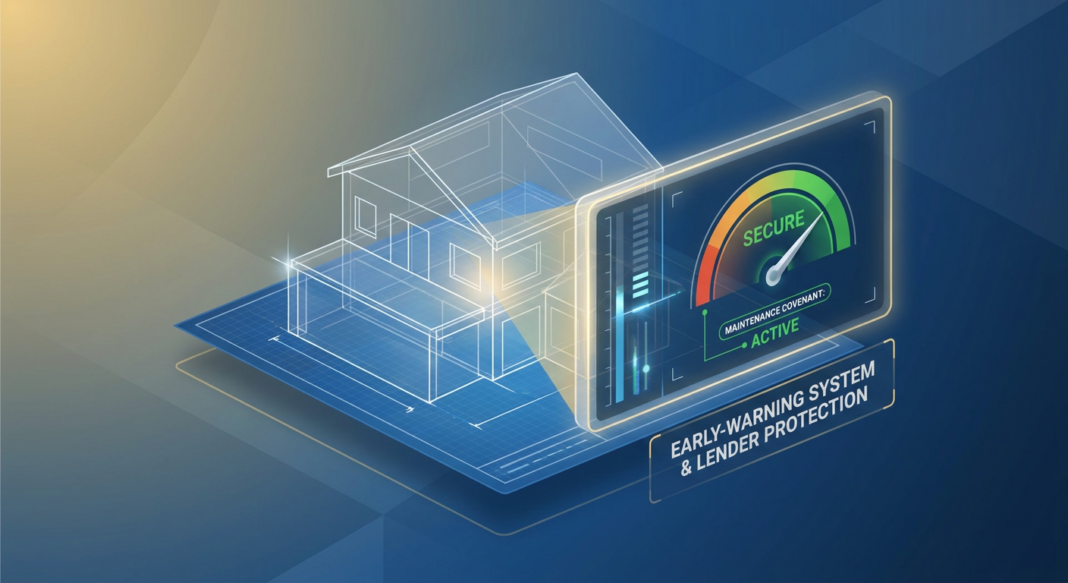
When a business borrows money, the loan agreement runs dozens of pages. Most borrowers focus on the interest rate and maturity date — the headline numbers. But seasoned private credit investors know that the most important section is often buried in the middle: the covenant package. Covenants are the contractual rules that govern how a borrower must behave, what financial metrics they must maintain, and what actions require lender approval throughout the life of the loan. They are, in essence, the early-warning system built directly into the debt contract.
In today’s credit market, the covenant landscape is sharply divided. The broadly syndicated loan (BSL) market — where banks package and sell loans to institutional investors — has largely abandoned financial maintenance covenants. Meanwhile, private credit’s direct lending market has retained them as a core structural feature. Understanding this divergence is critical for anyone evaluating private credit as an investment or considering it as a source of capital for their business.
This article explains how covenant structures work, why they matter, what they look like in a real transaction, and what current market data tells us about where terms are heading in mid-2026.
The Three Types of Covenants — and Why Maintenance Covenants Are the Key One
Loan covenants fall into three categories, each serving a different purpose:
- Affirmative Covenants require borrowers to take specific actions — delivering quarterly financial statements, maintaining insurance, paying taxes, and staying in compliance with applicable laws. Think of these as the “keep the lights on” obligations. They ensure transparency and enable lenders to monitor borrower health on an ongoing basis.
- Negative Covenants restrict what borrowers can do without lender consent. Common examples include limits on incurring additional debt, selling material assets, paying dividends or distributions above a defined threshold, or making acquisitions above a specified dollar amount. These covenants prevent borrowers from taking actions that could dilute collateral or impair repayment.
- Financial Maintenance Covenants are the most powerful category. They require borrowers to maintain specific financial ratios — typically tested every quarter. The most common is the total leverage ratio (Total Debt ÷ EBITDA), often paired with a fixed charge coverage ratio (EBITDA ÷ Fixed Charges). If the borrower’s metrics deteriorate past a defined threshold, a breach occurs — giving the lender immediate negotiating leverage to restructure, reprice, or seek remedies.
The critical distinction is this: affirmative and negative covenants are triggered by actions a borrower takes. Maintenance covenants are triggered by financial deterioration — even if the borrower did nothing “wrong.” This is what makes them so powerful as a risk management tool.
A Concrete Example: The Leverage Covenant in Practice
Imagine a private equity-backed software company — call it TechCo — that takes on a $50 million unitranche loan from a direct lender to fund a leveraged buyout. At close, TechCo has $10 million in EBITDA, producing a leverage ratio of 5.0x. The lender structures a maintenance covenant requiring TechCo to maintain a total net leverage ratio no greater than 6.0x, tested quarterly.
Fast forward eighteen months. TechCo loses a major customer. EBITDA falls from $10 million to $7 million. The $50 million debt balance hasn’t changed, but the leverage ratio has climbed to 7.1x — well above the 6.0x covenant threshold.
Result: Covenant Breach. TechCo is now in technical default under the credit agreement, even though it has not missed a single interest payment. This triggers a “standstill” period, typically 30 days, during which TechCo must either cure the breach (e.g., via a sponsor equity injection) or negotiate a waiver or amendment with the lender.
This is exactly the mechanism the covenant was designed to create. The lender now has contractual leverage to:
- Require additional collateral or sponsor equity
- Reset the covenant to a tighter level going forward
- Reprice the loan to compensate for higher risk
- Accelerate the loan if the situation warrants
Without that covenant, the lender might not have any meaningful leverage until TechCo actually misses a payment — potentially months or years later, by which point asset values have eroded and recovery prospects have diminished significantly.
Current Market Reality: A Tale of Two Credit Markets
The data on covenant usage tells a stark story of divergence between public and private credit markets.
According to Private Capital Global (September 2025), approximately 90% of new broadly syndicated loans in 2024 remained covenant-lite, continuing years of borrower-friendly documentation trends. In contrast, private credit lenders have maintained firmer positions on covenant inclusion, particularly in middle-market transactions, where maintenance covenants remain the standard expectation.
However, the private credit market is not monolithic. According to McKinsey’s Global Private Markets Report (2026), covenant-lite transactions rose to 21% of direct lending deals in 2025, up from just 4% in 2023 — a meaningful shift driven by competition for upper-middle-market deals that increasingly compete with the BSL market for the same borrowers.
The structural importance of maintaining covenants is being reinforced by current credit stress indicators. According to Sidley Austin (March 2026), leverage-based maintenance testing continues to anchor the vast majority of private credit structures, even as competitive pressures have introduced incremental flexibility in certain upper-market segments.
On the lender tightening front, the Federal Reserve’s April 2026 SLOOS reported that banks tightened standards for commercial and industrial loans across all firm sizes in Q1 2026 — and notably, tightened all terms surveyed on non-depository financial institution (NDFI) loans, including stricter loan covenants, higher premiums on riskier loans, shorter maturities, and stricter collateralization requirements. This means the broader credit tightening cycle is reinforcing the covenant discipline that private credit has long maintained.
Meanwhile, the performance case for covenanted structures holds up historically. According to Cliffwater (March 2026), the Cliffwater Direct Lending Index (CDLI) — which tracks US middle-market loans predominantly featuring maintenance covenants — returned 9.3% for full-year 2025, with a 20-year average of 9.6% and only one negative year on record (2008). Interest income drove the return at 10.4%, a figure that reflects the higher compensation private lenders receive for structural discipline and illiquidity.
On the cost-of-capital side, direct lenders are currently pricing quality middle-market loans at approximately SOFR + 425–475 basis points for strong upper-middle-market credits, translating to all-in rates in the 9%–10% range, according to Private Capital Global (September 2025). Deals that include tighter covenant packages can sometimes achieve slightly more favorable pricing relative to their risk profile, as the covenant protection itself reduces expected loss.
| Metric | Value | Source |
|---|---|---|
| BSL loans that are covenant-lite (2024) | ~90% | Private Capital Global, Sep 2025 |
| Direct lending deals that are covenant-lite (2025) | 21% (up from 4% in 2023) | McKinsey Global Private Markets Report, 2026 |
| CDLI full-year 2025 return | 9.3% (20-yr avg: 9.6%) | Cliffwater, March 2026 |
| Upper-middle-market unitranche all-in yield range | ~9.00%–9.75% | Valuation Research Corp., Q2 2026 |
| Banks tightening C&I lending standards, Q1 2026 | Net tighter across all firm sizes | Federal Reserve SLOOS, April 2026 |
Decision Framework: What Covenants Mean for Investors and Operators
For Investors Evaluating Private Credit Funds:
Covenant quality is one of the most important — and most overlooked — due diligence dimensions when evaluating a direct lending manager. Investors may consider asking:
- What percentage of portfolio loans carry at least one financial maintenance covenant? A well-structured mid-market portfolio should have a high share. Rising covenant-lite penetration at the upper-market level warrants scrutiny.
- What is the average covenant headroom? A leverage covenant set at 6.0x against a portfolio average leverage of 4.5x provides meaningful headroom. A covenant set at 5.5x with average leverage of 5.2x does not.
- How has the manager responded to past breaches? Waiver and amendment history reveals whether a manager actually uses its covenant rights or routinely waives them — in which case the covenant offers limited practical protection.
- Is the manager receiving adequate compensation for covenant concessions? When a borrower requests a covenant waiver or reset, best practice involves extracting economic consideration: an amendment fee, spread step-up, or additional collateral.
For Business Operators Seeking Capital:
Maintenance covenants are not inherently punitive — they are a negotiated risk-sharing mechanism. Operators evaluating private credit as a financing source may consider:
- Model your covenant cushion conservatively. A leverage covenant should be set at a level your business can comfortably maintain even in a stress scenario. Requesting a 20%–30% cushion above your projected peak leverage is a reasonable ask at closing.
- Understand the cure rights. Most private credit agreements include a sponsor equity cure right, allowing the PE owner to inject equity within a defined window to remedy a breach. Ensure this right is explicitly negotiated in.
- Distinguish between maintenance and incurrence covenants. If a lender presents a covenant as “maintenance” but it is only tested when you take an action (like an acquisition), it is actually an incurrence covenant — a meaningfully weaker protection for the lender, and more flexibility for you as a borrower.
- Compare private credit covenant risk against bank alternatives. Bank lines often include covenants too — sometimes tighter and with less flexibility on waivers than a relationship-oriented direct lender.
Key Takeaways
- Maintenance covenants are private credit’s structural edge. Unlike the broadly syndicated loan market — where roughly 90% of new loans are covenant-lite — direct lenders in the middle market have retained financial maintenance covenants as a standard feature, providing an ongoing early-warning system across the life of a loan.
- The three covenant types serve distinct purposes. Affirmative covenants ensure transparency; negative covenants restrict harmful borrower actions; financial maintenance covenants create a continuous performance monitoring mechanism triggered by financial deterioration — not just missed payments.
- Covenant-lite is creeping into private credit. McKinsey data shows covenant-lite transactions in direct lending rose from 4% in 2023 to 21% in 2025, concentrated in upper-middle-market deals competing with the BSL market. Investors evaluating private credit funds should specifically ask about covenant penetration by deal size segment.
- Bank tightening reinforces private credit’s covenant discipline. The Federal Reserve’s April 2026 SLOOS confirms banks are tightening all lending terms — including loan covenants — across commercial and industrial loans. This structural shift continues to expand the addressable market for direct lenders operating with disciplined covenant standards.
- For operators, covenant headroom is a negotiation, not a formality. The covenant level set at closing defines your financial operating room for the life of the loan. Requesting conservative headroom, understanding cure rights, and clarifying maintenance versus incurrence testing are all negotiable terms that materially affect a borrower’s flexibility throughout the credit relationship.


