
The Shift from Equity Hype to Physical Debt
The artificial intelligence narrative is undergoing a fundamental structural shift in the final quarter of 2025. For the past two years, the story was dominated by equity valuations and software breakthroughs. Today, the reality of physics has taken hold: AI requires concrete, copper, cooling systems, and gigawatts of power. Consequently, the financing model has pivoted from venture capital equity to heavy corporate debt.
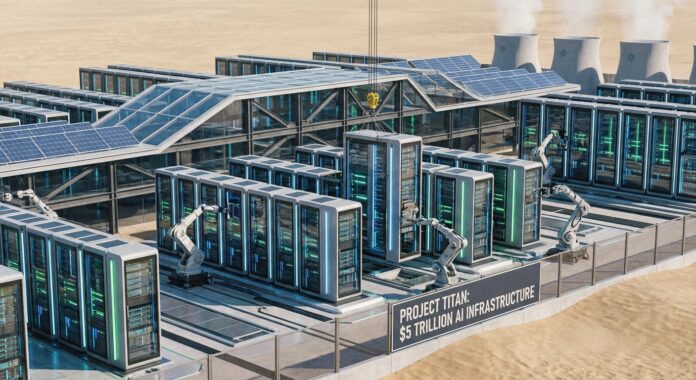
According to recent data from UBS, project financing for AI data centers has surged to $125 billion year-to-date, a massive leap from just $15 billion in the same period in 2024. [bnnbloomberg.ca]. This marks the beginning of a capital expenditure cycle that JPMorgan estimates could require $1.5 trillion in investment-grade bonds alone over the next five years, with the total infrastructure tab potentially reaching $5 trillion to $7 trillion. [investmentnews.com].
This is no longer a spec tech play; it is an industrial construction boom.
The “Shadow” on the Balance Sheet
As the capital demands intensify, a divergence in credit quality is emerging. While hyperscalers like Microsoft and Meta possess robust balance sheets, they are increasingly utilizing financial engineering to manage exposure. Reports indicate a trend of “risk transfer,” where tech giants sign complex leasing deals with smaller operators or special purpose vehicles. [nytimes.com]. This structure allows major players to keep liabilities off their books while pushing physical development risks onto smaller, private developers.
This opacity is creating friction in the credit markets. Fears of a supply glut are rising, with borrowers reportedly seeking aggressive terms—some requesting loan-to-cost ratios as high as 150% based on projected future valuations. [fortune.com]. Such metrics are classic indicators of “irrational exuberance,” drawing warnings from credit veterans like Oaktree’s Howard Marks regarding a potential bubble in the asset class.
Volatility Returns to Tech Credit
The assumption that tech credit is risk-free is being challenged. Oracle, a central player in the cloud infrastructure race, saw its Credit Default Swaps (CDS)—the cost to insure against default—spike to their highest levels since 2009. [bnnbloomberg.ca]. This widening spread reflects creditor concern over the sheer volume of leverage required to compete in the AI arms race. When the cost of protection rises for investment-grade issuers, it signals a tightening of liquidity that will inevitably impact downstream borrowers.
The Bond Capital Perspective
We are witnessing a decoupling of “AI Hype” from “AI Infrastructure.” The former is driven by speculative revenue projections; the latter is driven by tangible assets.
At Bond Capital, we recognize that the physical build-out of AI requires massive, flexible capital. However, the current “lending frenzy” described in financial media creates a dangerous environment for undisciplined capital. While some lenders may be tempted by 150% loan-to-cost requests to win deal flow, we maintain strict credit discipline.
What this means for borrowers:
- Asset Focus: We value the steel, the land, and the power contracts—not the speculative valuation of the tenant’s AI model.
- Transparency: As public markets wrestle with “circular deals” and off-balance-sheet synthetic leases, private credit offers a cleaner execution for borrowers who have real assets and verified cash flows.
- Speed vs. Stability: The market is volatile. Securing capital now, with a partner who understands complex CapEx cycles, is preferable to waiting for a public market window that may close as credit spreads widen.
We finance the reality of the economy, not the speculation. As the AI infrastructure bill comes due, Bond Capital is positioned to support the builders who are laying the physical foundation of the next decade’s economy.


